Blood pressure: the silent number that’s quietly running your life
What your readings really mean, what just changed in the guidelines, and what you should do about it today.
By The Numbers

What is blood pressure, actually?
There's a reason we check your blood pressure at every single visit. Not because it's a formality. Not because we need something to do while the room warms up. We check it because blood pressure is one of the most powerful predictors of how your heart, brain, and kidneys are going to hold up over the next decade — and most people have no idea their numbers are drifting in the wrong direction until something goes wrong.
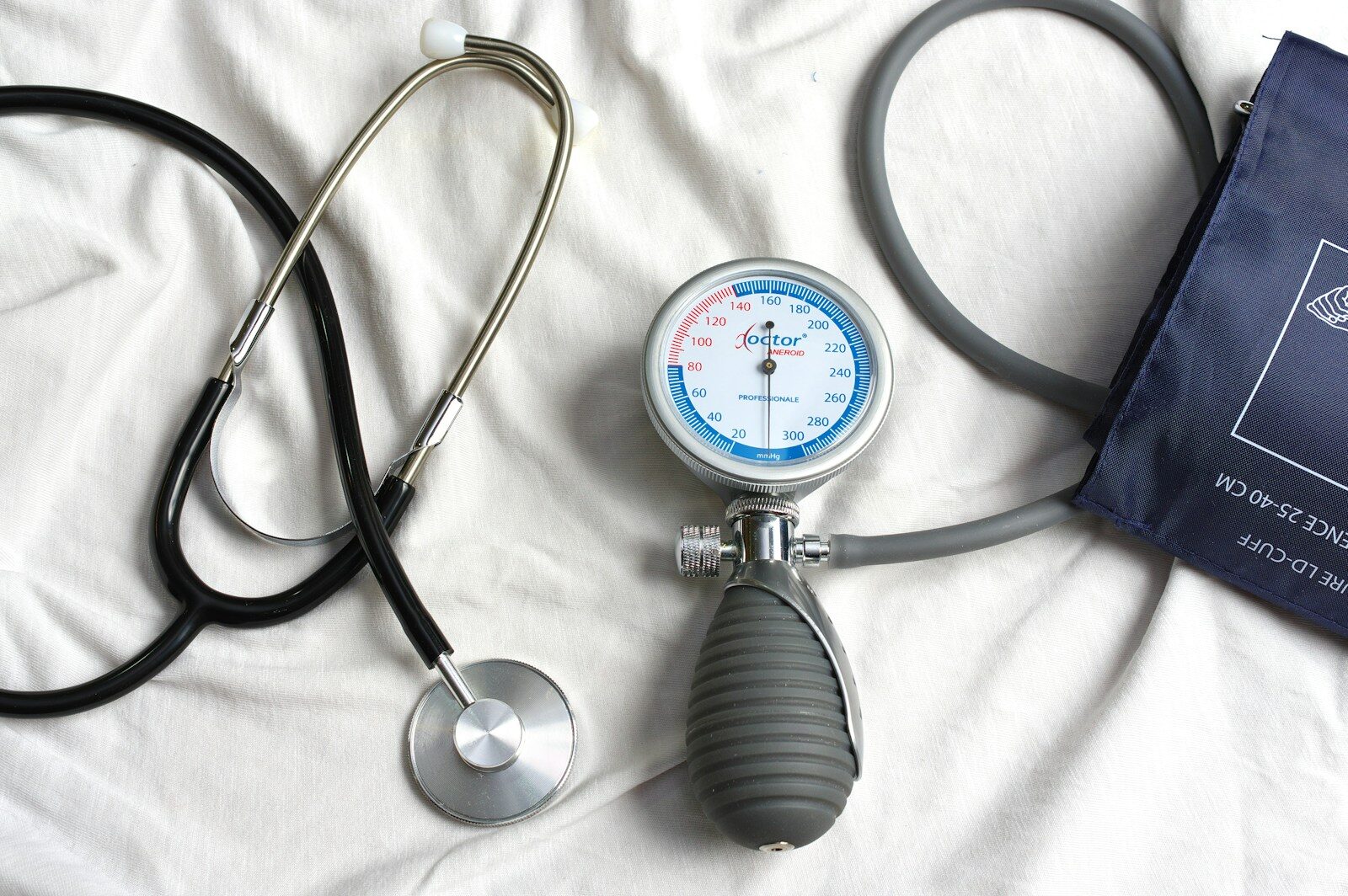
When your heart beats, it pumps blood through your arteries. Blood pressure is the force that blood exerts against the walls of those arteries as it moves through your body. The top number (systolic) is the pressure during a heartbeat. The bottom number (diastolic) is the pressure between beats, when your heart is resting.
Think of your arteries like a garden hose. If the pressure inside is chronically too high, the walls take a beating over time — they stiffen, thicken, and eventually fail in ways that damage everything downstream. Your heart works harder. Your kidneys lose function. Your brain becomes vulnerable to stroke and, increasingly, to cognitive decline. High blood pressure is behind about half of all heart attacks and strokes globally. It is the leading modifiable risk factor for death on the planet. That's not hyperbole. That's biology.
The numbers: what do they mean?
For decades, the cutoff for high blood pressure was 140/90 mmHg. If you were below that, you were fine. That framework turned out to be incomplete. The landmark SPRINT trial randomized over 9,000 high-risk adults to intensive blood pressure control (targeting below 120 mmHg systolic) vs. standard control (below 140 mmHg). The intensive group saw a 25% reduction in major cardiovascular events and a 27% reduction in all-cause mortality. The math is stark: for every 10 mmHg reduction in systolic blood pressure, patients experience a 17% lower risk of coronary heart disease, a 27% lower risk of stroke, a 28% lower risk of heart failure, and a 13% lower risk of dying from any cause.
- 27% lower stroke risk per 10 mmHg reduction in systolic BP
- 23% of US adults with hypertension currently meet the <130/80 target
- 46% of US adults now meet the definition of hypertension
- 1 in 2 heart attacks and strokes are linked to high blood pressure
Here are the current categories you should know:
| Category | Systolic (mmHg) | Diastolic (mmHg) |
|---|---|---|
| ✅ Normal Goal | < 120 | < 80 |
| ⚠️ Elevated Watch | 120–129 | < 80 |
| 🟠 Stage 1 Hypertension | 130–139 | 80–89 |
| 🔴 Stage 2 Hypertension | ≥ 140 | ≥ 90 |
| 🆘 Hypertensive Crisis | > 180 | > 120 |
Not sure where your numbers fall? Use the tool below to check your blood pressure category based on your most recent reading — and bring the result to your next appointment.
Check Your Blood Pressure Category
Enter your most recent reading to see what it means.
The 2025 guidelines: what just changed
In August 2025, the AHA and ACC published updated blood pressure guidelines — the first major revision since 2017 — and several updates deserve your attention.
The target stayed the same, but the urgency went up. The 2025 guidelines reaffirm a target of below 130/80 mmHg for most adults, but the emphasis on actually getting there is stronger than ever. Only 23% of U.S. adults with hypertension currently achieve it.
Stage 2 hypertension now gets two drugs from the start. For adults with blood pressure at 140/90 or higher, the new guidelines recommend starting two blood pressure-lowering medications simultaneously, preferably in a single pill. The old approach of starting one drug and waiting has been replaced by a more aggressive opening move — because the data supports it.
Risk-based decision-making got smarter. The guidelines now incorporate the PREVENT calculator — a more sophisticated tool factoring in kidney function, metabolic health, and cardiovascular risk together — to individualize treatment in a more meaningful way. Specific guidance was added for people with chronic kidney disease, pregnancy-related hypertension, and resistant hypertension.
Home monitoring is now essential, not optional. What we measure in the office is only part of the picture — and sometimes not the most accurate part.
Why "I feel fine" is dangerously misleading
High blood pressure has no symptoms. None. You don't feel your arteries stiffening. You don't feel your heart working harder. You don't feel the microscopic damage accumulating in your kidneys over years. This is why it earned the nickname "the silent killer" — not because it's rare, but because it does its work invisibly, over a long timeline, until one day it announces itself as a heart attack, a stroke, or kidney failure. By then, a lot of the damage is already done. The absence of symptoms is not reassurance. It is, in fact, the point.
"The absence of symptoms is not reassurance. It is, in fact, the point. This is a disease that speaks loudly only after it has been whispering for years."
What drives blood pressure up
- Sodium intake. The average American consumes nearly 3,400 mg of sodium per day — roughly double what's recommended. Your kidneys regulate fluid balance using sodium; excess sodium means excess fluid volume, which means more pressure. Potassium (leafy greens, avocados, beans, bananas) counterbalances this effect.
- Body weight. More body mass requires more blood vessels to supply it, increasing demand on your heart. Even modest weight loss — as little as 5% of body weight — has a measurable effect on blood pressure.
- Physical inactivity. Regular aerobic exercise makes blood vessels more elastic and strengthens the heart. Sedentary living does the opposite.
- Alcohol. Chronic alcohol use is a significant and underappreciated driver of hypertension, even at moderate levels in many people.
- Sleep quality. Untreated sleep apnea removes the normal nighttime blood pressure dip, keeping pressure elevated around the clock. If you snore loudly or wake unrefreshed, this is worth investigating.
- Chronic stress. Sustained psychological stress keeps cortisol and adrenaline elevated — which keeps blood pressure elevated. This isn't just a mood problem; it's a physiology problem.
- Genetics. Some people are more salt-sensitive or have family histories that load the dice. This doesn't make treatment inevitable, but it means you can't afford to ignore the other factors.
How we measure it — and why it matters
Blood pressure measurement seems simple. It isn't. White coat hypertension — elevated readings specifically in a clinical setting — is real and common. Masked hypertension — normal clinic readings that run high everywhere else — is equally real and equally dangerous. This is why the current guidelines recommend confirming a hypertension diagnosis with out-of-office measurements.
If you're checking at home, here's how to do it right: sit quietly for five minutes. Feet flat, back supported, arm at heart level. Don't talk during the measurement. Avoid caffeine, exercise, or significant stress in the 30 minutes prior. Take two readings one minute apart and average them. Do this at the same time each day — morning and evening — for a week. Bring that log to your appointment. A single reading is a snapshot. A week of readings is a story.
Treatment: it's not just pills
When lifestyle changes alone aren't enough — or when blood pressure is high enough that we can't wait — medication becomes part of the conversation. This isn't a failure. It's physiology. The most commonly used classes include ACE inhibitors, ARBs, calcium channel blockers, and thiazide diuretics. Each works through a different mechanism, which is why combinations are often used and why what works for one person may not be the first choice for another.
The updated guidelines advocate for single-pill combinations — two medications in one tablet — which improve adherence and often reduce side effects. SGLT2 inhibitors, originally developed for diabetes, are also gaining ground for their blood pressure and cardiovascular benefits, particularly in people with heart failure or chronic kidney disease.
Medication for blood pressure isn't a lifetime sentence with no room for change. People who make substantial lifestyle improvements sometimes reduce or eliminate their need for medication. But that conversation happens with data, over time — not with wishful thinking.
A word on cognitive health
One of the most compelling recent developments in hypertension research is its connection to brain health. The 2025 guideline updates specifically highlight the link between high blood pressure and increased risk of cognitive decline, stroke, and dementia. Alzheimer's disease and vascular dementia are increasingly understood not just as aging problems, but as vascular problems — shaped by decades of blood flow patterns. The damage chronic high blood pressure does to small brain vessels accumulates silently, just like cardiovascular damage. Controlling blood pressure in your 40s and 50s is not just about protecting your heart now. It's about protecting your mind in your 70s and 80s.
What you can do starting today
- Cut sodium. Read labels. Cook at home more. Processed foods, canned soups, deli meats, and restaurant meals are the primary sources for most people.
- Move your body. At least 150 minutes per week of moderate-intensity aerobic exercise. Brisk walking counts. More is better.
- Prioritize sleep. Seven to nine hours isn't a luxury; it's a blood pressure intervention.
- Limit alcohol. If you drink and your blood pressure is hard to control, consider stopping entirely.
- Manage stress actively. Build real recovery into your life — sleep, movement, social connection, time outside.
- Monitor at home. Know your numbers between visits.
- Come in. An annual physical is the single most reliable way to catch blood pressure problems before they become emergencies. Schedule an appointment at Altitude Family Medicine today.
Your next step is simple — and it might be the most important one you take this year.
High blood pressure has no warning signs. By the time you feel something, the damage has often already begun. The only way to know where you stand is to check — and the annual physical is where that starts. If you haven't been in recently, if your numbers have been creeping up, or if you just aren't sure, call us. We'll check your blood pressure, review your risk, and work with you on a plan that fits your life. No judgment. No pressure. Just the information you need to make better decisions for your health.
The bottom line
Blood pressure is not a bureaucratic checkbox in your annual physical. It is one of the most actionable numbers in your health — something you can genuinely move with behavior, and something that, when left unmanaged, quietly reshapes your risk for heart attack, stroke, kidney disease, and cognitive decline over years and decades. The science is clear. The tools are available. The gap between knowing and doing is where most people get stuck. We're here to help close that gap.
References
- Jones DW, Ferdinand KC, Taler SJ, et al. 2025 AHA/ACC/AANP/AAPA/ABC/ACCP/ACPM/AGS/AMA/ASPC/NMA/PCNA/SGIM guideline for the prevention, detection, evaluation, and management of high blood pressure in adults. J Am Coll Cardiol. 2025;86(18):1567–1678.
- SPRINT Research Group. A randomized trial of intensive versus standard blood-pressure control. N Engl J Med. 2015;373(22):2103–2116.
- Whelton PK, Carey RM, Aronow WS, et al. 2017 ACC/AHA/AAPA/ABC/ACPM/AGS/APhA/ASH/ASPC/NMA/PCNA guideline for the prevention, detection, evaluation, and management of high blood pressure in adults. J Am Coll Cardiol. 2018;71(19):e127–e248.
- Muntner P, Carey RM, Gidding S, et al. Potential US population impact of the 2017 ACC/AHA high blood pressure guideline. Circulation. 2018;137(2):109–118.
- Burlacu A, Kuwabara M, Brinza C, Kanbay M. Key updates to the 2024 ESC hypertension guidelines and future perspectives. Medicina. 2025;61(2):193.
- McEvoy JW, et al. 2024 ESC guidelines for the management of elevated blood pressure and hypertension. Eur Heart J. 2024;45(38):3912–4018.
- Ettehad D, Emdin CA, Kiran A, et al. Blood pressure lowering for prevention of cardiovascular disease and death: a systematic review and meta-analysis. Lancet. 2016;387(10022):957–967.
- American Heart Association. 2025 high blood pressure guideline. professional.heart.org. Accessed May 2026.
This article is for educational purposes and reflects current evidence as of 2025. Individual recommendations may vary. Always discuss your specific situation with your healthcare provider.